
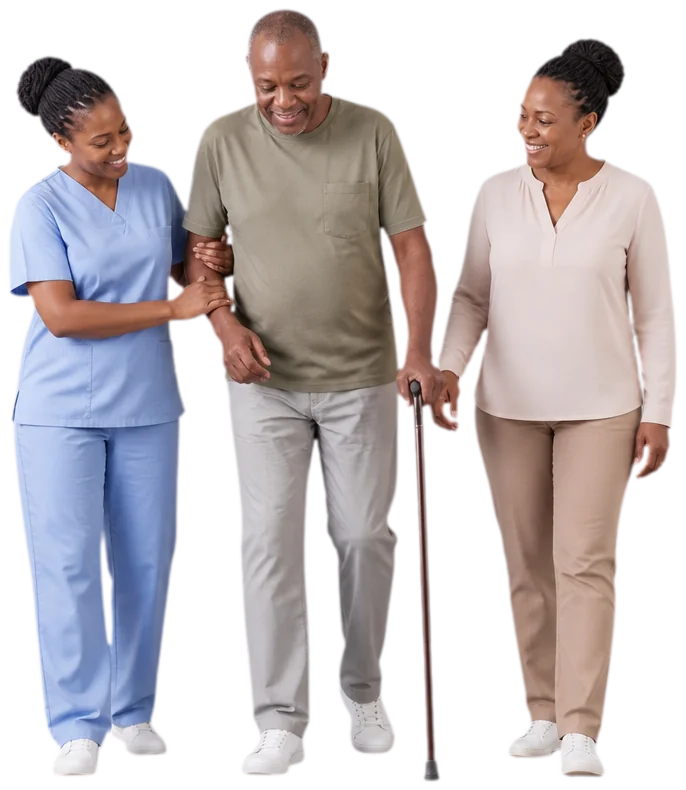
The path to the gate
Some weeks the goal is the gate.
Some weeks the goal is to reach the gate. Later it is the shop. Later still, the walk home, on your own.
The people in these stories are illustrations, not real clients.
The moment
Some weeks the goal is to reach the gate. Later it is the shop. Later still, the walk home, on your own. Someone is always close behind you, and you both pretend you do not notice.
What is usually going on
After a stroke, a fracture, surgery or a fall, the body and the brain have to learn the movements again. Muscles weaken when they are not used, balance changes, and fear of falling can make you move less, which weakens you further. Rehabilitation works in small steps: practising standing, shifting weight, walking with support and building strength a little at a time. Everyone moves at a different pace. Progress is often uneven, and some days feel slower than others.
Now
Walking needs a stick, a person or a wall. Stairs are a decision. Family worry every time you stand.
Our aim
Walking farther and with more confidence, and your family knowing how to help you without taking over.
What we do about it
An assessment of strength, balance and how you walk, followed by a plan that starts where you are. We practise getting up from a chair, standing safely, walking with or without an aid and managing steps. Family are welcome to come to sessions so they know how to help at home. We never promise a timeline.
One thing to try today
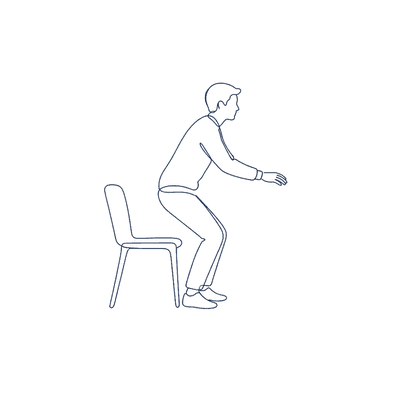
Sit to stand
- Sit near the front of a sturdy chair with your feet flat.
- Lean slightly forward and stand up, using your hands only if you must.
- Sit down slowly.
- Do five, with someone close by.
Stop if you feel dizzy or unsteady.
This page is for general information and is not a substitute for personal medical advice.