
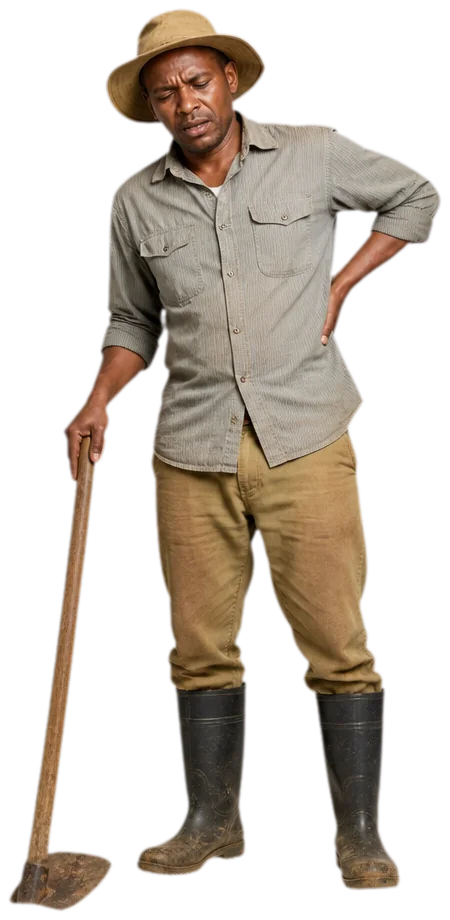
The shamba
Bend, pull, lift, bend again.
Bend, pull, lift, bend again. By tea time your lower back has done a full day's work.
The people in these stories are illustrations, not real clients.
The moment
Bend, pull, lift, bend again. By tea time your lower back has done a full day of work and it is not yet lunch. You straighten up slowly, one hand on the small of your back, and carry on, because the work will not do itself.
What is usually going on
Lower back pain
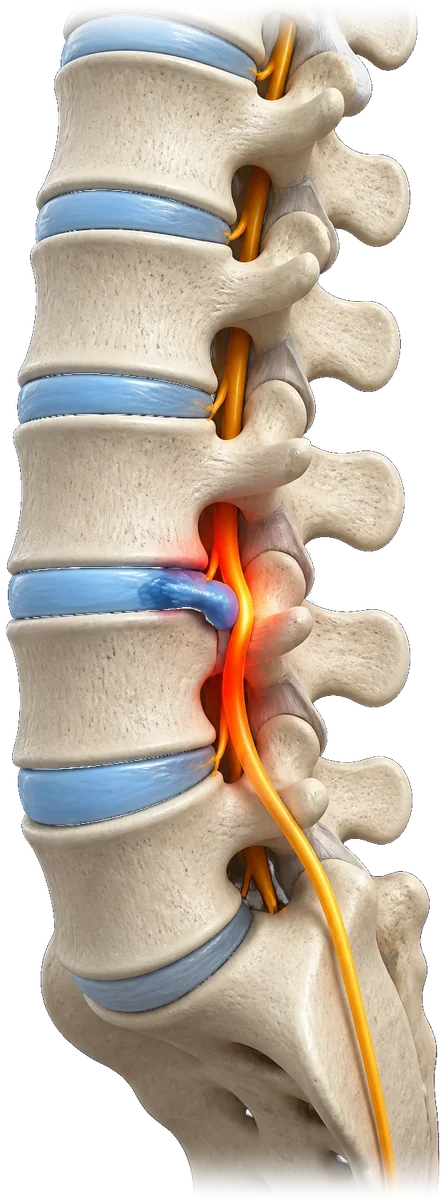
Most lower back pain comes from the muscles, ligaments and joints of the back being asked to do more than they were ready for. Repeated bending and lifting, a sudden awkward movement, long hours of sitting and weak support muscles are common reasons. The spine is built of bones separated by discs, held by strong muscles. When those muscles tire, the load shifts to the joints and discs, and the area becomes sore and guarded. Staying in bed for days usually makes it worse. Staying gently active usually helps.
Sciatica
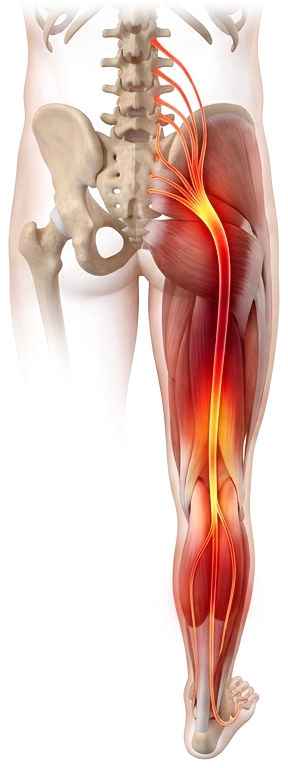
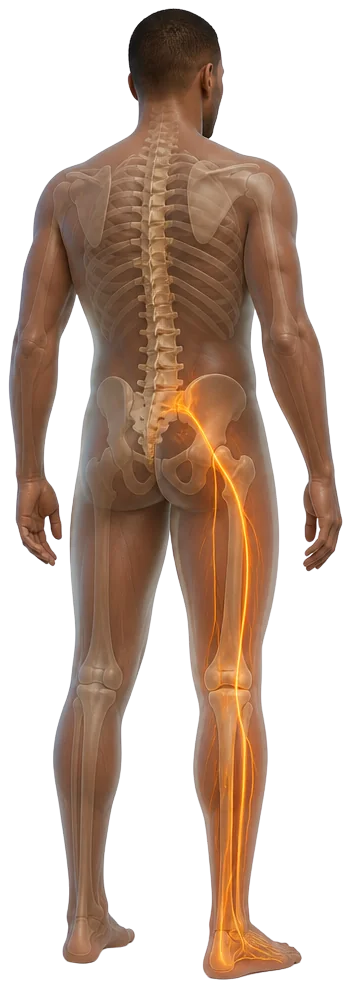
Sometimes the pain does not stay in the back. The sciatic nerve begins in the lower back, passes through the buttock and runs down the back of the leg to the foot. When a disc or a tight structure presses on one of the nerve roots, you can feel pain, burning, tingling or numbness along that path, often on one side only. Sitting, coughing or bending forward can make it worse. Many people improve with the right movement and guidance, and a physiotherapist can work out which movements calm the nerve and which irritate it.
Now
You avoid bending, you sleep badly, you worry about the next day's work, and the pain sometimes follows you down the leg.
Our aim
Getting through a working day with less pain and more confidence in your back, so you can bend and lift again without bracing for it.
What we do about it
First, a proper assessment: where it hurts, what you do all day, how your back and hips move, and whether the nerve is involved. Then gentle hands-on treatment to ease the muscles and joints, and a plan of movements that you can do at home or in the field. We teach you how to lift and carry in a way that spares your back. We tell you honestly what to expect and when to come back. We do not promise a quick fix.
One thing to try today
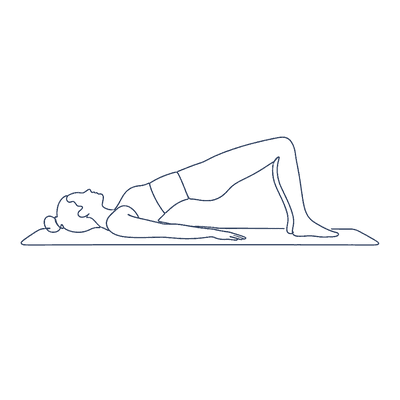
The glute bridge
- Lie on your back with your knees bent and feet flat.
- Press your feet down and lift your hips until your body makes a straight line from shoulders to knees.
- Hold for two breaths and lower slowly.
- Do eight.
Stop if the pain gets worse or travels down your leg.
This page is for general information and is not a substitute for personal medical advice.